AnyRoR Gujarat Rural Land Records – How to Search Village Land Details Online
Checking land records is an important step for farmers, landowners, buyers and legal heirs who want to understand the revenue information associated with rural property in Gujarat. The state has computerized village land records through its e-Dhara system and provides online access to Record of Rights information through AnyRoR Gujarat.
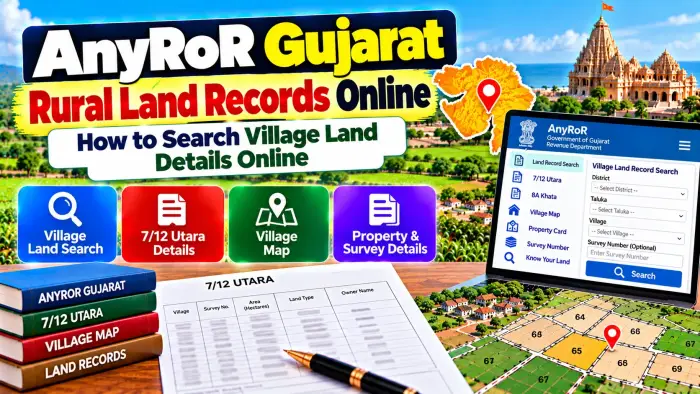
AnyRoR helps users search available rural land details using information such as District, Taluka, Village, Survey or Block Number, Khata Number and landholder details. Important records commonly associated with Gujarat's rural land system include Village Form 7/12, VF8A Khata Details and VF6 mutation entries.
Using AnyRoR Gujarat Rural Land Records can make preliminary land verification easier. However, an online revenue record should not be treated as the only document needed to establish legal ownership.
This guide explains how to search Gujarat village land details online, what different Village Forms mean and what users should verify before relying on a land record.
AnyRoR Gujarat Rural Land Records – Quick Overview
| Details | Information |
|---|---|
| State | Gujarat |
| Land Record System | AnyRoR / e-Dhara |
| Record Category | Rural Land Records |
| Main Record | Village Form 7/12 |
| Khata Record | VF8A |
| Mutation Record | VF6 |
| Search Location | District, Taluka and Village |
| Parcel Identifier | Survey / Block Number |
| Account Identifier | Khata Number |
| Landholder Search | Available in applicable system |
| Mutation Information | Available through relevant records |
| Record of Rights | Digitized through e-Dhara |
| Digitally Signed Records | Available through applicable service |
| Ownership Verification | Compare with registered documents |
What Is AnyRoR Gujarat?
AnyRoR is Gujarat's online system for viewing applicable land-record information.
It is connected with the state's broader land-record computerization initiative. Gujarat's e-Dhara project was introduced to convert physical village land records into electronic records and provide a more transparent system for maintaining and updating them.
Through digital land-record services, users can review important information without depending entirely on manual searches of physical village records.
For rural land, different Village Forms provide different categories of information. This is why users should understand which record is appropriate for their purpose.
What Is e-Dhara?
e-Dhara is Gujarat's computerized land-record system.
The project was developed to digitize village land records and automate their maintenance and updating.
e-Dhara Kendras at Taluka Mamlatdar offices handle land-record activities such as mutation and the issue of applicable Record of Rights copies.
The computerized system can search land data using information such as Khatedar name, Khata Number and Survey Number.
Therefore, AnyRoR and e-Dhara form important parts of Gujarat's digital rural land-record ecosystem.
What Rural Land Records Can You Check?
Gujarat maintains several Village Forms for rural land administration.
Three records are particularly important:
VF7/12 is commonly used for survey or parcel-related land and cultivation information.
VF8A is associated with Khata or land-account information.
VF6 is associated with mutation entries recording applicable changes in rights.
These records have different purposes. Checking more than one record can therefore provide a broader understanding of the landholding.
What Is Gujarat 7/12 Utara?
The 7/12 Utara is one of the best-known rural land records in Gujarat.
It is associated with the applicable survey parcel and can contain important revenue and agricultural information.
Users commonly check 7/12 details when reviewing rural or agricultural land.
The record should be matched with the correct District, Taluka, Village and Survey or Block Number.
Because land records can change following certified mutations, users should pay attention to the current entry rather than relying solely on an old paper copy.
What Is VF8A Khata?
Village Form 8A is associated with the Khata or land account.
A Khata Number is different from a Survey Number.
A Survey Number identifies a particular surveyed land parcel, while a Khata relates to the applicable landholding account.
Depending on the holding, one Khata can be connected with more than one parcel.
VF8A can therefore be useful when users want to understand the account associated with a particular landholder and the land connected with it.
What Is Village Form 6?
Village Form 6, commonly called VF6, is particularly important for mutation information.
A mutation entry records an applicable change in land rights or landholding in the revenue records.
Such changes can arise from events such as sale, inheritance, subdivision or other qualifying transactions.
After a mutation is certified, the resulting changes can be reflected in the relevant land records.
Therefore, VF6 can be important when researching how a current land entry developed over time.
Details Required to Search Village Land Records
Before starting your AnyRoR search, collect the available property information from your existing documents.
Useful details include:
District
Taluka
Village
Survey Number
Block Number, where applicable
Khata Number
Khatedar or landholder name
You may find these details in an older 7/12 Utara, VF8A record, registered deed or another revenue document.
Always verify the correct village before relying on a Survey or Khata Number.
How to Search AnyRoR Gujarat Rural Land Records Online
Start with Gujarat's official online land-record facility.
Choose the option for viewing rural land records.
Select the type of record you want to check.
For example, you may need Survey Number information, VF8A Khata Details or a mutation-related record.
Select the correct District.
Next, select the Taluka and Village.
Provide the Survey, Block, Khata or other information requested for the selected record.
Complete the verification displayed by the system and submit the search.
Review the available land details carefully.
The exact screen layout and options can change when the government updates the digital service.
How to Search Land by Survey Number
The Survey Number is one of the most useful identifiers for finding a particular land parcel.
First, select the correct District, Taluka and Village.
Then use the Survey or Block Number associated with the property.
Review the available parcel information and compare it with your existing land documents.
If the property has been subdivided or its survey reference has changed, additional records may be necessary to understand the current parcel.
Never identify land solely by a number without checking its village and other location details.
How to Search Land by Khata Number
If you know the Khata Number, use the applicable VF8A Khata search.
The Khata can help connect a recorded landholding account with the relevant land information.
Compare the Khata details with the Survey or Block Numbers appearing in other land records.
This is particularly useful when one landholder has multiple parcels recorded under an account.
If you do not know the Khata Number, applicable owner-name search facilities can help locate Khata information.
How to Search Land by Owner Name
Gujarat's computerized land-record system supports searches based on Khatedar or landholder information.
An owner-name search can be useful if you do not have the Khata Number readily available.
However, a person's name should not be treated as a unique property identifier.
People can have similar or identical names.
After locating a possible record, verify the District, Taluka, Village, Khata and Survey details to make sure you have found the intended landholding.
What Is Mutation in Gujarat Land Records?
Mutation is the process through which applicable changes in land rights are entered into the revenue records.
A mutation can become relevant after a sale, inheritance, subdivision or another recognized change.
Gujarat's e-Dhara system provides a computerized workflow for mutation-related activities.
The mutation entry is important because an old landholder's name can remain in a revenue record if the applicable update has not been completed.
However, mutation and registration of a property document are distinct processes.
What Is a 135-D Notice?
A 135-D notice is associated with the applicable mutation process in Gujarat.
Where required, notice and objection procedures can form part of the process before a mutation entry is finally certified.
For people checking land before a purchase, mutation-related information can therefore be important.
If a recent mutation or notice is associated with the property, examine the relevant records and understand the status before relying on the updated land information.
AnyRoR Rural Records vs Property Cards
Users should distinguish between rural land records and urban property records.
AnyRoR rural services focus on applicable village land records such as 7/12, VF8A and mutation information.
Urban or applicable non-agricultural properties can involve Property Cards and separate land-record services.
Therefore, before searching, identify whether the property falls under the rural revenue-record system or an applicable urban/city survey system.
Using the wrong category can lead to difficulty locating the record.
Digitally Signed Village Forms
Gujarat Revenue Department also provides a service for obtaining applicable digitally signed Village Forms.
This is important because simply viewing information online and obtaining an officially issued digital record are not necessarily the same thing.
If a land record is required for an official application, bank, legal proceeding or another formal purpose, check which type of certified or digitally signed record is required.
A screenshot should not automatically be assumed to have the same status as an officially issued document.
AnyRoR Records Before Buying Land
AnyRoR can be useful during preliminary verification before purchasing rural land.
Start with the Survey or Block Number mentioned in the registered property document.
Check the relevant 7/12 information.
Review VF8A to understand the Khata details.
Examine VF6 mutation information where relevant.
Compare the recorded landholder and property details with the registered documents.
For a significant purchase, applicable registration, encumbrance and title records should also be examined.
What If the Online Land Details Are Incorrect?
First make sure you searched the correct District, Taluka, Village and Survey or Khata information.
Then compare the AnyRoR result with older revenue records and the registered deed.
A difference may be connected with mutation, inheritance, subdivision, an older entry or an error requiring correction.
Gujarat Revenue Department provides online revenue-application services for various land matters, including applicable correction and mutation-related requests.
Use the prescribed official process rather than relying on unauthorized agents.
Does AnyRoR Prove Legal Ownership?
AnyRoR provides important revenue land-record information, but an online revenue entry should not automatically be treated as conclusive proof of legal title.
Legal rights can arise through registered sale deeds, inheritance, gift, partition, court orders and other legally recognized documents or events.
Revenue records are important for understanding how rights and landholding are recorded administratively.
For complete ownership verification, examine the applicable registered documents, mutation history and other relevant legal records.
Frequently Asked Questions (FAQ)
1. What is AnyRoR Gujarat?
AnyRoR is Gujarat's online system for accessing applicable land-record information, including rural land records.
2. What rural land records can I check?
Important records include 7/12, VF8A Khata Details and VF6 mutation-related information.
3. What details are needed for an AnyRoR search?
District, Taluka, Village and applicable Survey, Block, Khata or landholder details may be required.
4. What is Gujarat 7/12 Utara?
It is an important rural revenue record associated with survey-parcel and land information.
5. What is VF8A?
VF8A is associated with Khata or land-account details.
6. What is VF6?
VF6 records applicable mutation entries relating to changes in land rights.
7. Can I search Gujarat land records by owner name?
The computerized land-record system supports applicable searches using Khatedar or owner information.
8. Is a Khata Number the same as a Survey Number?
No. A Survey Number identifies a parcel, while a Khata Number relates to a landholding account.
9. Can I obtain digitally signed land records?
Gujarat Revenue Department lists a service for obtaining applicable digitally signed Village Forms.
10. Does AnyRoR alone prove legal ownership?
No. Revenue records are important, but complete title verification can require registered deeds and other relevant legal documents.
Conclusion
AnyRoR Gujarat Rural Land Records provides a convenient way for farmers, landowners, buyers and other users to search available village land information digitally. Gujarat's e-Dhara system has computerized village land records and supports access to important records such as 7/12, VF8A and VF6.
For an accurate search, select the correct District, Taluka and Village and use the appropriate Survey Number, Block Number, Khata Number or landholder information. Different Village Forms serve different purposes, so checking multiple records can provide a clearer understanding of the property.
Before buying, selling or dealing with inheritance involving rural land, compare AnyRoR information with mutation records, registered property documents and other applicable records. Online land records are valuable for preliminary verification, but complete legal ownership should be assessed using all relevant revenue, registration and title documents.