Gujarat 8A Khata Online – Check Landholder Information and Land Account Details
Land records are important for farmers, property owners, buyers and legal heirs who want to understand how agricultural or rural land is recorded in Gujarat. Among the important records maintained in the state's land-record system is Village Form 8A, commonly referred to as VF8A Khata Details.
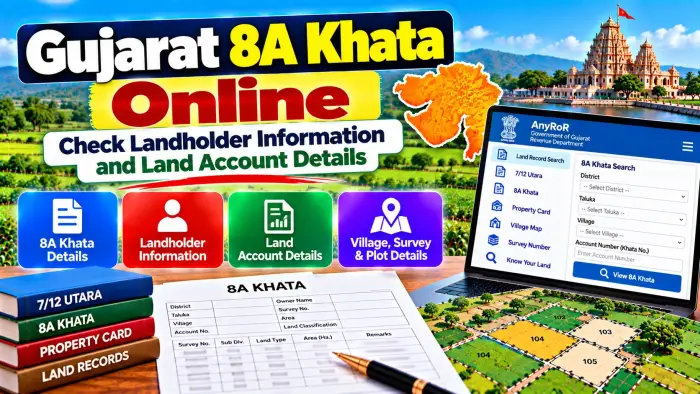
Village Form 8A is associated with the land account or Khata information maintained in the revenue records. It can help users identify the applicable landholding account and understand the land connected with that Khata.
Gujarat provides digital access to land records through the AnyRoR system. Citizens can check several types of rural land records, including VF7 Survey Number Details, VF8A Khata Details and VF6 Entry Details.
A Gujarat 8A Khata Online search can therefore be useful when checking landholder and land-account information. However, an online revenue record should be compared with registered deeds and other relevant records before making an important property decision.
Gujarat 8A Khata – Quick Overview
| Details | Information |
|---|---|
| State | Gujarat |
| Record Name | Village Form 8A |
| Common Name | VF8A Khata Details |
| Record Type | Land Account Record |
| Land Record System | AnyRoR |
| Main Purpose | Check Khata / account details |
| Location Details | District, Taluka and Village |
| Important Identifier | Khata Number |
| Landholder Details | Available in applicable record |
| Related Record | VF7 Survey Number Details |
| Mutation Record | VF6 Entry Details |
| Mutation Notice | 135-D |
| Service System | e-Dhara / AnyRoR |
| Property Verification | Compare multiple official records |
What Is Gujarat Village Form 8A?
Village Form 8A, or VF8A, is an important land-account record in Gujarat's rural land-record system.
It is commonly associated with Khata Details.
A Khata can be understood as an account maintained in the revenue system for the applicable landholding. The 8A record helps connect the account with land recorded under it.
This makes VF8A particularly useful when a person wants to check the land account associated with a landholder rather than looking only at one individual survey parcel.
However, VF8A should be understood as part of the wider Record of Rights system and not as a replacement for every other land document.
What Is a Khata Number?
A Khata Number is an important reference associated with a landholding account in the revenue records.
It is different from a Survey Number.
A Survey Number identifies a particular surveyed parcel or unit of land, while the Khata Number relates to the applicable land account.
Depending on the landholding, a Khata can be associated with more than one survey parcel.
Therefore, users should not assume that a Khata Number and Survey Number represent exactly the same thing.
Checking both can provide a clearer picture of the recorded landholding.
What Information Can VF8A Khata Provide?
VF8A focuses on account-related land information.
Depending on the applicable record, users can use the Khata details to understand the landholding associated with the account and the relevant landholder information.
The record can be particularly useful when you want to identify the parcels connected with a land account within the relevant village.
For parcel-specific information, however, VF7 Survey Number Details may also need to be checked.
Using VF8A together with other Village Forms provides a more complete understanding of the revenue record.
What Is AnyRoR Gujarat?
AnyRoR is Gujarat's digital land-record service provided by the Revenue Department.
The system provides access to rural and urban land-record information.
For rural land, users can access several types of records, including VF7 Survey Number Details, VF8A Khata Details and VF6 Entry Details.
Additional services can also be available for mutation-related information and other land-record searches.
The availability of multiple record types is important because no single Village Form necessarily provides every detail required for complete property verification.
Details Required to Check Gujarat 8A Khata
Before starting a VF8A search, collect the available land information from your documents.
Important details can include:
District
Taluka
Village
Khata Number
Landholder's name
Survey or Block Number, where relevant
Existing 7/12 or other land-record details
You may find this information in an older land record, registered property document or another Revenue record.
Always make sure you select the correct village because similar Khata numbers can exist in different locations.
How to Check Gujarat 8A Khata Online
Start with the official Gujarat AnyRoR land-record system.
Choose the option for viewing rural land records.
From the available record types, select VF8A Khata Details.
Choose the correct District.
Next, select the Taluka and Village where the land is located.
Provide the Khata-related information requested by the system.
Complete the Captcha or other verification displayed on the page.
Submit the search to view the available record details.
Review the displayed information carefully and compare it with your existing land documents.
The exact interface can change as government digital services are updated.
How to Find Khata Information by Landholder Name
Gujarat's rural land-record services also include search options designed to help users locate Khata information when certain property details are not known.
For example, the AnyRoR rural land-record system lists an option for finding a Khata using the owner's name.
This can be useful when you know the landholder information but do not have the Khata Number readily available.
Once the applicable Khata is identified, compare it with the relevant land and survey records.
Names alone should not be used for final property identification because different people can have similar names.
Gujarat VF8A vs VF7
VF8A and VF7 are both important Village Forms, but they have different functions.
VF8A focuses on Khata or land-account details.
VF7 focuses more on the details associated with a particular Survey Number.
Therefore, if you want to understand the land account of a holder, VF8A can be particularly relevant.
If you want to examine a specific survey parcel, VF7 should also be reviewed.
Checking the two together can help connect the landholder's account with the individual survey parcels.
Gujarat VF8A vs VF6
VF6 is another important record in Gujarat's land-record system.
VF6 is associated with mutation entries or changes recorded in land rights.
Changes can arise from events such as sale, inheritance, distribution or other applicable transfers.
VF8A, on the other hand, focuses on the land account or Khata.
Therefore, when verifying how a landholding reached its current recorded position, users may need to examine VF6 in addition to VF8A.
What Is Mutation in Gujarat Land Records?
Mutation refers to updating the revenue land record after an applicable change in rights or landholding.
A mutation can arise after events such as a registered sale, inheritance or distribution of land.
Gujarat's e-Dhara system supports computerized processing of land-record mutations.
Mutation information can therefore be important when checking whether an older landholder's details have been updated following a qualifying transaction.
However, mutation and registration of a property document are distinct processes.
What Is a 135-D Notice?
A 135-D Notice is associated with the mutation process in Gujarat land records.
AnyRoR includes a facility for checking applicable 135-D mutation notices.
When a mutation is being processed, notice and objection procedures can form part of the applicable revenue process.
If you are checking land before purchase, reviewing relevant mutation information can help identify whether changes to the revenue record are being processed.
The presence of a notice should be understood in the context of the applicable mutation entry and official records.
8A Khata and 7/12 Utara
The terms 8A Khata and 7/12 are commonly encountered when dealing with rural Gujarat land records.
They should not be treated as identical records.
VF8A focuses on land-account or Khata details.
VF7 and VF12 contain other land and cultivation-related information associated with survey records.
Therefore, checking only 8A may not provide all the information required for a particular land parcel.
For broader verification, users may need to compare VF8A with VF7/12 and mutation records.
How to Check Landholder Information
Start by identifying the correct District, Taluka and Village.
Use the applicable Khata information to retrieve VF8A details.
Then compare the recorded landholder information with other relevant land records.
If you are checking a particular parcel, compare the Khata information with VF7 Survey Number Details.
For a property transaction, also compare the revenue records with the registered document.
This reduces the risk of relying on a single record that may not show the entire history or legal basis of the landholding.
What If You Do Not Know the Khata Number?
If the Khata Number is not available, check your existing land documents first.
Older 8A records, 7/12 documents and other Revenue records may contain useful account information.
AnyRoR also provides applicable search facilities for finding Khata information using the landholder's name.
Once you locate the Khata, verify it against the correct village and related Survey Numbers.
Do not rely solely on a matching name without checking the associated property information.
What If VF8A Information Is Incorrect?
If the landholder, Khata or associated land information appears incorrect, compare the record with other official documents.
Check VF7, VF6 mutation entries, the registered deed and previous land records.
A discrepancy may arise because a mutation has not been completed, an older entry remains in the record or another correction is required.
Gujarat's e-Dhara system handles computerized mutation and land-record updates through the applicable Revenue administration.
Use the prescribed official process rather than relying on unauthorized intermediaries.
Gujarat 8A Khata Before Buying Land
Checking VF8A can be useful during preliminary land verification.
First, confirm that the seller's information is consistent with the relevant Khata.
Then identify the Survey or Block Numbers connected with the property and check the corresponding land records.
Review applicable VF6 mutation information and any relevant 135-D notice.
Also compare the land records with the registered property documents.
For a significant transaction, additional title, registration and encumbrance-related verification may be necessary.
Does 8A Khata Prove Legal Ownership?
VF8A is an important revenue land-account record, but it should not automatically be treated as standalone conclusive proof of legal title.
Legal rights in land can arise through registered sale deeds, inheritance, gift, partition, court orders and other legally recognized documents or events.
Revenue records provide important information about how the landholding is recorded for revenue purposes.
For complete title verification, VF8A should therefore be examined together with registered and other legally relevant documents.
Digitally Signed Land Records
Gujarat also provides facilities for obtaining applicable computerized or digitally signed Record of Rights documents.
The purpose of a digitally authenticated record can differ from simply viewing basic information online.
If a land record is required for an official, legal or institutional purpose, check which certified or digitally signed document is required by the receiving authority.
Do not assume that a screenshot of an online land record has the same status as an officially issued record.
Frequently Asked Questions (FAQ)
1. What is Gujarat 8A Khata?
Gujarat Village Form 8A is a revenue record associated with Khata or land-account details.
2. Can I check VF8A Khata online?
Gujarat's AnyRoR rural land-record system provides access to VF8A Khata Details.
3. What is a Khata Number?
A Khata Number identifies the applicable landholding account within the revenue record.
4. Is Khata Number the same as Survey Number?
No. A Khata relates to the land account, while a Survey Number identifies a particular surveyed land parcel.
5. What details are needed to check VF8A?
District, Taluka, Village and applicable Khata information are important for the search.
6. Can I find Khata by owner's name?
AnyRoR lists a rural land-record option for locating Khata information using the owner's name.
7. What is the difference between VF8A and VF7?
VF8A provides Khata/account details, while VF7 focuses on Survey Number-related land information.
8. What is VF6?
VF6 is associated with mutation entries recording applicable changes in land rights.
9. Should I check 8A before buying land?
VF8A can be useful, but it should be compared with VF7, VF6, registered documents and other relevant records.
10. Does 8A Khata prove legal ownership?
It is an important revenue record, but complete legal title verification can require registered deeds and other relevant legal documents.
Conclusion
Gujarat 8A Khata Online provides a convenient way to check land-account and landholder information through the state's digital land-record system. Village Form 8A is particularly useful for understanding the Khata associated with a rural landholding.
For an accurate search, select the correct District, Taluka and Village and use the applicable Khata information. If the Khata Number is not known, available owner-name search facilities can help identify the relevant account.
For complete land verification, do not rely on VF8A alone. Compare the Khata details with VF7 Survey Number information, VF6 mutation entries, applicable 135-D notices and registered property documents. This provides a clearer understanding of both the revenue account and the land associated with it.