Punjab Land Record Online – Check Jamabandi, Fard, Khewat and Khasra Details
Checking land records is an important step for landowners, farmers, property buyers and legal heirs in Punjab. Revenue records can help users identify the recorded landholder, locate a particular land parcel, review the landholding account and understand the available history of a property.
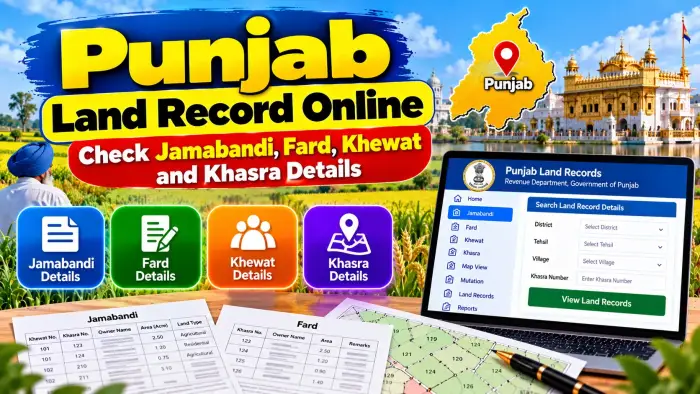
Punjab provides an online Land Records system where citizens can view Jamabandi and access several related services. The portal currently allows Jamabandi searches through Owner Name, Khewat Number, Khasra Number and Khatouni Number.
Citizens can also access services related to mutation, registered deeds, Fard requests, record corrections and cadastral information.
Understanding terms such as Jamabandi, Fard, Khewat and Khasra is important because they refer to different aspects of the land-record system.
This guide explains Punjab Land Record Online and how to check important land details correctly.
Punjab Land Record Online – Quick Overview
| Details | Information |
|---|---|
| State | Punjab |
| Service | Punjab Land Records |
| Main Revenue Record | Jamabandi |
| Record Copy | Fard |
| Ownership/Holding Reference | Khewat Number |
| Parcel Reference | Khasra Number |
| Cultivation/Holding Reference | Khatouni Number |
| Search by Owner Name | Available |
| Search by Khewat Number | Available |
| Search by Khasra Number | Available |
| Search by Khatouni Number | Available |
| Current/Previous Jamabandi | Available |
| Digital Signed Fard | Available |
| Mutation Information | Available |
| Registered Deed View | Available |
| Record Correction | Fardbadar service available |
What Is Punjab Land Record Online?
Punjab Land Records is the digital system of the state's Department of Revenue, Rehabilitation and Disaster Management.
The portal allows citizens to access applicable land and revenue information without depending entirely on physical record searches.
Users can select the relevant Jamabandi period and location details such as District, Tehsil, Village and Year.
They can then use the available search method to find the required land record.
The portal also brings several related services together, including mutation, Fard, registered deed and record-correction facilities.
What Is Jamabandi in Punjab?
Jamabandi is an important revenue record associated with landholding and land rights.
It can provide information connected with recorded landholders and parcels within a particular revenue estate.
When checking Jamabandi online, it is important to select the correct location and record period.
Punjab's portal currently provides options for Current and Previous Jamabandi periods.
Jamabandi can be useful when checking land before a transaction, comparing old and current records, or identifying the Khewat and Khasra references connected with a property.
What Is Fard?
A Fard is commonly used as a copy or extract of the applicable land record.
Punjab's official portal currently provides a dedicated service for obtaining a Digital Signed Copy of Fard.
The available search methods for a digitally signed Fard include Owner Name, Khewat Number, Khatouni Number and Khasra Number.
This distinction is important because simply viewing land information on a screen and obtaining a digitally signed Fard are not necessarily the same thing.
Where a formally issued digital record is required, users should use the appropriate Fard service.
What Is a Khewat Number?
A Khewat Number is an important reference in Punjab's land-record system associated with a proprietary or ownership holding.
It helps users locate the relevant holding within the Jamabandi.
Punjab's official portal provides a specific Khewat No. Wise Jamabandi search.
When you know the Khewat Number, you can use it along with the correct District, Tehsil, Village and Jamabandi period to locate the applicable record.
Do not confuse the Khewat Number with the Khasra Number, as they serve different purposes.
What Is a Khasra Number?
A Khasra Number is primarily used to identify an individual land parcel or field within a revenue estate.
It is one of the most useful references when researching a specific piece of land.
Punjab's official portal provides a Khasra No. Wise Jamabandi search.
A Khasra Number should always be checked together with the relevant Village and other location information.
The same numerical reference should not be assumed to identify land across different villages.
What Is a Khatouni Number?
Khatouni Number is another important reference used in Punjab revenue records.
It relates to the applicable holding or cultivation account reflected in the Jamabandi system.
Punjab Land Records currently provides a dedicated Khatouni No. Wise search option.
Khewat, Khatouni and Khasra should not be treated as interchangeable numbers.
Each helps identify a different part of the revenue-record structure.
Khewat vs Khasra Number
Understanding the difference between Khewat and Khasra is important.
A Khewat Number relates to the ownership or proprietary holding recorded in the land record.
A Khasra Number identifies an individual land parcel or field.
A landholding can involve multiple Khasra Numbers.
Therefore, when checking a specific parcel, do not stop after finding the Khewat. Review the Khasra details connected with the relevant holding.
Similarly, starting with a Khasra Number can help you identify the associated Jamabandi information.
How to Check Punjab Jamabandi Online
Start with the official Punjab Land Records portal.
Select whether you want the Current or Previous Jamabandi period.
Choose the District where the land is situated.
Select the appropriate Tehsil.
Choose the Village.
Select the relevant Year where requested.
Next, choose your preferred Jamabandi search method.
The portal currently supports Owner Name Wise, Khewat No. Wise, Khasra No. Wise and Khatouni No. Wise searches.
Enter or select the requested information and review the displayed land record carefully.
How to Search by Owner Name
If you do not know the Khewat or Khasra Number, the Owner Name search can be useful.
First select the correct location and Jamabandi period.
Choose Owner Name Wise search.
Locate the relevant recorded person and review the corresponding record.
A matching name alone should not be treated as enough to identify a property.
Compare the owner name with the Village, Khewat, Khasra and other available land particulars.
This is particularly important where several people have similar names.
How to Search by Khewat Number
If you already know the Khewat Number, select the relevant District, Tehsil, Village and record period.
Choose Khewat No. Wise.
Enter or select the applicable Khewat reference.
Review the corresponding Jamabandi information.
Check the recorded landholders and identify the Khasra Numbers connected with the relevant property.
If the land is being purchased or transferred, compare these details with the registered deed and current revenue information.
How to Search by Khasra Number
A Khasra-based search is useful when you want to investigate a specific parcel.
Select the District, Tehsil and Village.
Choose the appropriate Jamabandi period.
Select Khasra No. Wise.
Enter or choose the relevant parcel reference.
Review the resulting record and compare the Khasra with the available Khewat, Khatouni and owner details.
Always confirm that the parcel corresponds with the property described in your existing documents.
How to Get a Digital Signed Fard
Punjab Land Records currently provides a dedicated Digital Signed Copy of Fard service.
Users can search for the applicable Fard through Owner Name, Khewat Number, Khatouni Number or Khasra Number.
Follow the current instructions shown on the portal and provide the requested land and applicant information where applicable.
If you specifically need an officially issued digital Fard, use this service rather than assuming that a normal Jamabandi screen view has the same status.
Fard Request Status
The Punjab Land Records portal also provides a Fard Request Status facility.
Users who have already submitted a Fard request can use the applicable Request ID to check its status.
Keep the request information safely after submitting an application.
This can help you track whether the request is still being processed or has reached the applicable completion stage.
Jamabandi and Mutation
A land record may require updating when rights in the property change.
This process is generally associated with mutation, also known as Intkal in the revenue system.
Punjab's official portal provides mutation-related services, including viewing mutation by Mutation Number and requests based on inheritance or a registered deed.
A registered deed and mutation serve different functions.
Therefore, after a property transaction or inheritance, check whether the expected changes are reflected in the relevant land record.
What Is Fardbadar?
Punjab Land Records provides an online Fardbadar service for correction in records.
If a land record contains an apparent error, do not simply alter or reinterpret the information yourself.
First compare the Jamabandi with your registered documents and other relevant records.
Where an official correction is required, use the applicable government procedure.
The portal currently includes an online request facility for Fardbadar or correction in records.
Punjab Land Records Before Buying Property
Land records can be useful for preliminary verification before purchasing property.
Start with the seller's registered deed.
Identify the Village, Khewat and Khasra Numbers.
Check the corresponding Jamabandi.
Compare the recorded owner information.
Review relevant mutation information and registered deed details.
Where necessary, examine cadastral information and other applicable property records.
For a significant transaction, complete title verification should involve all relevant legal and revenue documents rather than only one online record.
Does Jamabandi Prove Legal Ownership?
Jamabandi is an important revenue record, but complete legal title verification should not depend on a single revenue entry.
Registered sale deeds, inheritance documents, gift or partition documents, court orders and other legally relevant records can also affect property rights.
Mutation information can help show changes reflected in the revenue record.
For important land matters, compare the current Jamabandi with registered documents and other relevant records.
Frequently Asked Questions (FAQ)
1. Can I check Punjab land records online?
Yes. Punjab Land Records provides online access to applicable Jamabandi and related services.
2. What is Jamabandi?
Jamabandi is an important revenue record associated with landholding and recorded rights.
3. What is Fard?
Fard is commonly used for a copy or extract of the applicable land record. Punjab also provides a Digital Signed Copy of Fard service.
4. What is a Khewat Number?
Khewat Number is an important reference associated with a proprietary or ownership holding.
5. What is a Khasra Number?
Khasra Number identifies an individual land parcel or field within the relevant revenue estate.
6. Is Khewat the same as Khasra?
No. Khewat relates to a holding, while Khasra identifies an individual parcel.
7. Can I search Jamabandi by owner name?
Yes. The official portal provides an Owner Name Wise search option.
8. Can I search land by Khatouni Number?
Yes. Punjab Land Records provides a Khatouni No. Wise Jamabandi search.
9. Can I obtain a digitally signed Fard online?
Yes. The official portal currently provides a Digital Signed Copy of Fard service.
10. Can incorrect land records be corrected online?
Punjab Land Records provides a Fardbadar request service for applicable corrections in records.
Conclusion
Punjab Land Record Online provides a convenient way to check important property information through Jamabandi, Fard, Khewat, Khatouni and Khasra details.
Users can search Jamabandi by Owner Name, Khewat Number, Khasra Number or Khatouni Number after selecting the appropriate District, Tehsil, Village and record period.
For users who require an applicable formally issued record, the portal also provides a Digital Signed Copy of Fard service. Mutation, registered deed and Fardbadar correction facilities provide additional ways to investigate changes and discrepancies in land records.
For important property transactions, compare the Jamabandi with the registered deed, mutation information and other relevant legal and revenue documents rather than relying on a single online entry.