Tamil Nadu Patta Application Status Online – How to Track Your Land Record Application
After applying for a Patta-related land record service in Tamil Nadu, the next important step is to track the application. Checking the status helps applicants understand whether their request is under processing, requires additional information, has been approved or has reached another stage in the official workflow.
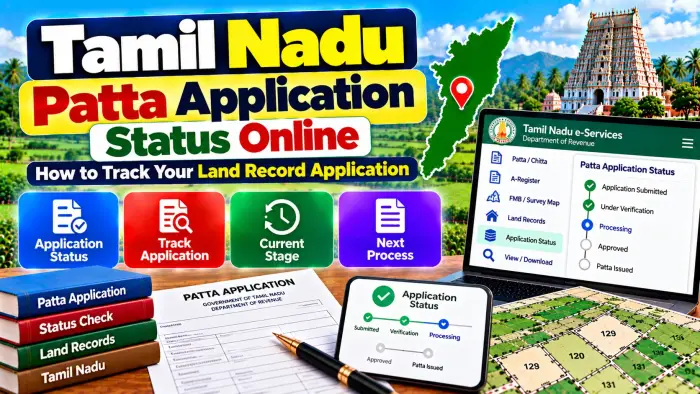
Tamil Nadu provides digital citizen services through the e-Sevai system, including several Revenue Department services related to land records. Applicants who submit an eligible Patta service can receive an application or acknowledgement reference that should be kept safely for tracking purposes.
Using the Tamil Nadu Patta Application Status Online facility can reduce the need to visit an office simply to ask whether an application has progressed. However, the exact status wording and processing steps can vary according to the service and verification required.
This guide explains how to track a Patta application, what details you should keep ready, what different status messages can mean and what to do if your application is delayed or requires correction.
Tamil Nadu Patta Application Status – Quick Overview
| Details | Information |
|---|---|
| State | Tamil Nadu |
| Service | Patta / Land Record Application |
| Service Platform | e-Sevai |
| Department Category | Revenue Services |
| Tracking Reference | Application / Acknowledgement Number |
| Related Service | Patta Transfer |
| Important Land Detail | Survey Number |
| Additional Detail | Sub-Division Number |
| Location Details | District, Taluk and Village |
| Status Facility | Online application tracking |
| Verification | Subject to applicable Revenue process |
| Approval | Depends on records and verification |
| Record Update | Check after approval |
| Problem Resolution | Use official service/Revenue channel |
What Is Tamil Nadu Patta?
Patta is an important revenue record associated with a landholding in Tamil Nadu.
Depending on the applicable record, Patta-related information can be connected with the recorded landholder, Patta number, survey number, subdivision and land extent.
People may need Patta-related services after purchasing, inheriting, receiving or otherwise acquiring applicable rights in land.
A Patta is part of the revenue-record system and should be distinguished from a registered sale deed or another title document.
What Is a Patta Application?
A Patta application is a request submitted through the applicable Tamil Nadu Revenue service for a Patta-related action.
One common example is Patta Transfer, where the applicant requests an update to the applicable revenue landholding record following a qualifying change.
Different situations can involve different supporting documents and verification.
For example, a purchase-based request may rely on a registered transaction document, while an inheritance case can require succession-related supporting documents.
Submission of the application begins the process; it does not by itself mean that the requested update has been approved.
Why Should You Track Your Patta Application?
Tracking allows you to understand the progress of your application.
If the request is still being processed, you can avoid unnecessarily submitting another application.
If additional information or clarification is required, checking the status can help you identify the issue sooner.
Tracking is also useful after the expected processing period has passed because your application number provides a reference when contacting an official service channel.
Most importantly, status tracking helps distinguish between application submitted and application approved.
These are not the same thing.
Details Required to Check Patta Application Status
Keep the acknowledgement issued when the application was submitted.
The most important tracking detail is usually the applicable Application Number or reference number.
You should also keep the following property information available for your own records:
Applicant's name
Application/Acknowledgement Number
District
Taluk
Village
Survey Number
Sub-Division Number
Existing Patta Number, where applicable
Registered document details, where relevant
The tracking facility may not require every one of these details, but keeping them ready can be useful if further verification is needed.
Where Can You Check Tamil Nadu Patta Application Status?
Tamil Nadu provides e-governance services through the e-Sevai system.
The Directorate of e-Governance lists Revenue services such as Patta Transfer, and the e-Sevai ecosystem provides application-related citizen services.
Applicants should use the official government service facility associated with the application they submitted.
Avoid third-party websites claiming that they can provide guaranteed approval or modify the official status of a Patta request.
How to Check Tamil Nadu Patta Application Status Online
First, keep the application or acknowledgement number ready.
Open the applicable official Tamil Nadu e-Sevai or government citizen-service facility.
Choose the option for checking or tracking application status.
Enter the requested Application Number or reference information.
Complete any verification displayed by the system.
Submit the request.
The system should display the available status information associated with that application.
Read the status carefully and keep a screenshot or copy for your records where appropriate.
Because government portals can be updated, the exact names and positions of buttons can change over time.
What Does “Application Submitted” Mean?
If the system indicates that the application has been submitted or received, it generally means the request has entered the official workflow.
It should not be interpreted as final approval.
The application may still need document scrutiny, Revenue verification or other processing.
Applicants should retain their acknowledgement and continue tracking the request.
Avoid making important property decisions solely because an application has been successfully submitted.
What Does “Under Process” Mean?
An “under process” or similar status generally indicates that the application is still being handled within the applicable administrative workflow.
The authorities may be reviewing the information, checking existing records or completing other necessary verification.
The amount of time required can vary depending on the application and circumstances.
A case involving a straightforward existing parcel can differ from one involving subdivision, inheritance, conflicting records or other issues.
Therefore, an under-process status does not automatically indicate a problem.
What Happens During Patta Verification?
Revenue authorities may examine the information and documents submitted with the application.
They can compare the request with existing land records and other relevant documents.
Important property identifiers such as Survey Number and Sub-Division Number can be particularly important.
Where the application involves a transfer of only part of a larger survey parcel, additional subdivision or survey-related action may be necessary.
Similarly, if the submitted documents do not match the existing revenue records, additional clarification can be required.
What Does Approved Status Mean?
An approved status generally indicates that the applicable authority has accepted the request through the relevant workflow.
After approval, applicants should check the updated land record when it becomes available.
Confirm that important details such as the landholder information, survey number, subdivision and extent are correctly reflected.
If you notice an error even after approval, use the appropriate official correction or Revenue process rather than assuming the application itself will automatically correct every related record.
What If Additional Documents Are Required?
Sometimes an application cannot proceed because information or supporting documents are incomplete.
If the status or official communication indicates that clarification is required, identify exactly what has been requested.
Compare your submitted documents with the registered deed and existing land records.
Provide the required information through the prescribed channel.
Do not upload unrelated documents simply to increase the number of attachments. The documents should support the specific landholding and transaction involved.
What If Your Patta Application Is Rejected?
A rejected or returned application should not simply be resubmitted without understanding the reason.
Check the reason provided through the official system or communication.
Possible issues can involve incomplete documents, inconsistent property information, survey or subdivision problems, or circumstances requiring a different procedure.
Correct the underlying issue first.
If the reason is unclear, use the appropriate e-Sevai or Revenue Department channel for clarification.
The next step should depend on the actual reason recorded for the application.
Patta Status After Property Purchase
If you applied for Patta Transfer after purchasing land, keep your registered sale deed and application acknowledgement available.
Compare the District, Taluk, Village, Survey Number, Sub-Division Number and land extent across the documents.
After the application is approved and the applicable record is updated, verify the new Patta information.
Do not assume that registration of the sale deed and updating the revenue record are exactly the same administrative process.
Both records can be important for complete property documentation.
Patta Application Status for Inherited Property
Inheritance-related Patta applications can involve additional verification.
The Revenue authority may need to examine documents establishing the death of the previous holder, legal heirs and the basis on which the landholding should be updated.
Where multiple heirs or disputed rights are involved, the process can be more complicated than a straightforward transfer.
Applicants should therefore keep all relevant succession documents and existing land records ready.
A status showing that the application remains under verification does not necessarily mean it has been rejected.
Survey Number and Patta Application
A Survey Number is an important identifier for the land involved in a Patta application.
It identifies a surveyed parcel within the applicable village records.
If the property is part of a subdivided survey field, the Sub-Division Number can also be essential.
Incorrect survey details can create problems during verification.
Before applying or responding to a clarification request, compare these numbers with the registered deed, existing Patta/Chitta, A-Register and FMB information where applicable.
Patta Application Status and FMB
FMB stands for Field Measurement Book.
It is a survey record containing measurement and spatial information associated with applicable land parcels.
If a Patta application involves subdivision, measurement or uncertainty about the exact parcel, survey records such as FMB may become relevant.
However, checking the application status itself does not replace the need for an official survey where physical boundary verification is required.
What If Patta Application Status Is Not Showing?
First check that the application or acknowledgement number has been entered correctly.
Make sure you are using the official service associated with the application.
A recently submitted request may also require some time before all processing information appears in the tracking system.
If the status remains unavailable, use the acknowledgement details to contact the applicable official e-Sevai or Revenue service channel.
Avoid creating multiple applications unless instructed to do so.
What to Do If Your Application Is Delayed
Continue checking the official application status and keep a record of the acknowledgement.
Review whether any document or clarification has been requested.
If no clear update is available, contact the appropriate official service channel with your Application Number and property information.
For a case requiring field verification, subdivision or additional record examination, processing may involve more steps than a simple application.
Never pay an unknown intermediary who promises guaranteed or immediate Patta approval.
How to Check Patta After Approval
After the transfer or update is completed, review the applicable land record through Tamil Nadu's official land e-Services.
Check the recorded landholder information.
Verify the Patta Number, Survey Number and Sub-Division Number.
Compare the land extent with the registered property document.
If applicable, also compare the A-Register and FMB information.
This final check is important because an approved application should still be reviewed to make sure the resulting land record corresponds with the intended property.
Does Approved Patta Status Prove Legal Ownership?
An approved Patta application is important for the revenue record, but Patta should not be treated as the only document for establishing complete legal title.
Ownership can depend on registered sale deeds, inheritance documents, gift or settlement deeds, partition records, court orders and other legally relevant documents.
Patta is therefore one component of property documentation.
For a major purchase, dispute or complex inheritance matter, all relevant title, registration, revenue and survey records should be examined together.
Frequently Asked Questions (FAQ)
1. Can I check Tamil Nadu Patta application status online?
Tamil Nadu's e-governance system provides application-related services that allow applicants to track applicable requests using their reference details.
2. What is required to track a Patta application?
Keep the Application Number or acknowledgement reference issued when the request was submitted.
3. What does “under process” mean?
It generally indicates that the application is still moving through the applicable verification or administrative process.
4. Does application submission mean Patta is approved?
No. Submission only starts the process. Approval remains subject to applicable verification.
5. Can Patta Transfer status be checked?
Applicants can use the applicable official application-tracking facility to check the status of submitted Revenue service requests.
6. Why is my Patta application taking time?
Document verification, survey issues, subdivision, inheritance or discrepancies in existing records can require additional processing.
7. What should I do if my application is rejected?
Check the recorded reason, correct the underlying problem and follow the appropriate official process for the next step.
8. What if my status is not available online?
Verify the Application Number and official tracking service. If the problem continues, contact the appropriate official service channel.
9. Should I check my Patta after approval?
Yes. Verify the updated landholder, Survey Number, Sub-Division Number and other important details.
10. Does an approved Patta application prove legal title?
Patta is an important revenue record, but complete title verification can require registered deeds and other legally relevant documents.
Conclusion
Tamil Nadu Patta Application Status Online provides a convenient way to track the progress of an applicable land-record request without repeatedly visiting an office for basic status information.
Keep the Application or Acknowledgement Number safely after submitting a Patta-related service. Use the official Tamil Nadu e-Sevai or applicable government service to check whether the request is being processed, requires additional information or has reached an approval stage.
If the application is delayed, returned or rejected, check the reason before submitting another request. Also make sure that the District, Taluk, Village, Survey Number and Sub-Division Number match your property documents.
After approval, verify the updated Patta and compare it with the registered deed and relevant survey records. Patta status tracking is useful for following a revenue-record application, but complete property verification should always consider the applicable registration, revenue and survey documents together.